Can I Trust CBD Products That Only Show a Leaf Sticker and No Details?
A leaf sticker can suggest “natural,” “hemp,” or “wellness,” but it cannot tell you what is in a CBD product. If the package gives you no CBD amount, no serving information, no ingredient list, and no way to check a lab report, you do not have enough information to make an informed purchase. That does not prove the product is unsafe or fake. It does mean you should pause before buying it.
When people search for cbd label vague branding, no coa cbd, or no cbd mg listed, they are often trying to answer a straightforward question: “What am I actually getting?” The answer should be easy to find on the label or through a reliable, product-specific lab report—not hidden behind general marketing language.
This guide explains what to check, how to distinguish CBD from other hemp ingredients, and what a certificate of analysis can—and cannot—tell you. The same checklist applies whether you saw a product in a shop, read about it in The Daily News at thedailynewsonline.com, or encountered a brand in an audio feature delivered through Trinity Audio. Media coverage and polished packaging are not substitutes for product details.
Start with the CBD amount: per bottle is not per serving
A label may advertise a large number on the front, such as “1,000 mg.” Find out whether that figure means CBD in the entire bottle, CBD in one serving, or total cannabinoids. Those are different measurements. A bottle’s total amount can sound impressive while each serving contains much less.
For example, a 1,000 milligram tincture in a one ounce bottle is roughly 30 servings, about 33 milligrams per serving, assuming the serving size is around one milliliter. The math is 1,000 mg divided by about 30 servings. But a dropper is not automatically a full milliliter: check the package for a marked serving size, and do not assume that “one dropper” means the same thing across products.
Label information What it tells you What to check Total CBD per container The stated CBD amount in the whole bottle or package Is it clearly identified as CBD, rather than total cannabinoids? CBD per serving The stated CBD amount in the labeled serving Is the serving size defined in milliliters, drops, or another usable measure? Total cannabinoids The combined amount of cannabinoids included in the figure Does the label separately state how much of that amount is CBD? Price per milligram A way to compare cost against the stated CBD amount Divide the price by total CBD milligrams—not by a vague “hemp” amount.Price comparisons are only useful when the amount being compared is clear. For instance, if a hypothetical bottle costs $60 and contains 1,000 mg of CBD, the price is six cents per milligram ($60 ÷ 1,000). If the package lists only “1,000 mg hemp extract,” you cannot safely assume that means 1,000 mg of CBD. The arithmetic may be simple; the label still has to tell you what number belongs in it.
“Total cannabinoids” is not the same as a CBD disclosure
Cannabinoids are a group of compounds found in cannabis plants. CBD is one cannabinoid, but it is not the only one. A product might state “500 mg total cannabinoids” without telling you how much of that figure is CBD. That is not a clear answer to the question, “How much CBD is in this product?”
Look for CBD identified by name, with an amount per container and, ideally, per serving. If the package uses a term such as “hemp extract,” “hemp oil,” or “total cannabinoids,” check whether it also gives a separate CBD figure. If not, a seller’s verbal explanation or a QR code to a generic brand page should not fill in the gap.
Make sure “hemp oil” does not mean hemp seed oil
Hemp seed oil is made from hemp seeds. It can be used as a food oil or as an ingredient in skin-care products, but it is not the same thing as CBD oil and does not naturally provide the CBD content people may expect from a CBD tincture. Labels that lean heavily on hemp leaves, green colors, or the word “hemp” can blur that distinction.
Read the full ingredient list and the product description. A CBD product should identify its CBD content. Hemp seed oil may appear as a carrier oil, but if it is the only hemp-derived ingredient listed and there is no CBD amount, do not assume that the product contains meaningful CBD. When the packaging is unclear, ask the seller for the exact CBD content and a matching lab report. If they cannot provide either, choose a product with clearer documentation.
Full spectrum, broad spectrum, and isolate: what those terms mean
These terms describe the type of extract used; they do not tell you the CBD amount, the quality of the product, or whether it is suitable for you. Definitions and product formulations can thedailynewsonline vary, so verify the details on the label and in the lab report.
- Full spectrum: Generally describes an extract intended to retain CBD and other naturally occurring hemp compounds, which may include trace THC. Check the product’s THC disclosure and the lab report. “Full spectrum” does not mean THC-free.
- Broad spectrum: Generally describes an extract containing CBD and some other hemp compounds, with THC removed or reduced to a stated level. Do not treat the term as proof of zero THC; check the test results and applicable rules.
- Isolate: Generally refers to CBD separated from other cannabinoids and plant compounds. A product made with isolate may still contain other ingredients, so read the full label.
None of these terms replaces a clear milligram declaration. A bottle can be called “full spectrum” and still leave you guessing about how much CBD it contains.
Look for a real, product-specific certificate of analysis
A certificate of analysis (COA) is a laboratory report describing test results for a sample. For a CBD product, it may report cannabinoid levels and, depending on the testing performed, results for contaminants such as pesticides, heavy metals, residual solvents, or microbes. A COA is useful evidence, but it is not a blanket guarantee of safety, effectiveness, or regulatory approval.

A QR code on packaging linking to a lab report document can make verification easier—if it opens the actual report for the product you are considering. A code that leads to a homepage, a marketing page, or a generic collection of reports is not enough. That is one of my instant side-eye label phrases: “scan for results” followed by a link that never gets you to the results.
Use a batch/lot number matching system
Find the batch or lot number on the package, then compare it with the number on the COA. A batch/lot number matching system should let you connect the exact item in your hand to the tested sample. Check that the report names the product, identifies the batch or lot, and has a date that makes sense for the product. If the number is missing, does not match, or cannot be found in the report, ask the company for the correct document before buying.
Also check that the report identifies the testing laboratory and provides actual results, not only a “pass” badge. Compare the reported cannabinoid values with the label’s CBD claim. Small differences can happen because of testing and manufacturing variation, but a major mismatch deserves an explanation. If the report’s units or terms are hard to interpret, ask the company or a qualified professional rather than guessing.
- Scan the package QR code or visit the company’s lab-report page.
- Open the report itself—not just a brand homepage or product advertisement.
- Match the product name and batch/lot number to your package.
- Confirm the report lists CBD separately from total cannabinoids.
- Review the report date and the tests performed, including any contaminant testing relevant to the product.
- Contact the company if anything is missing or inconsistent; walk away if it cannot provide a clear answer.
What if the label only has a leaf sticker?
If the “label” is effectively just a leaf sticker, treat it as a warning to investigate—not as proof of a particular problem. Before purchasing, look for a complete package label with the product identity, ingredients, CBD amount, serving size, manufacturer or responsible company details, and any required warnings. Product rules vary by location, so local requirements may differ. Still, a buyer should be able to identify what the product claims to contain.
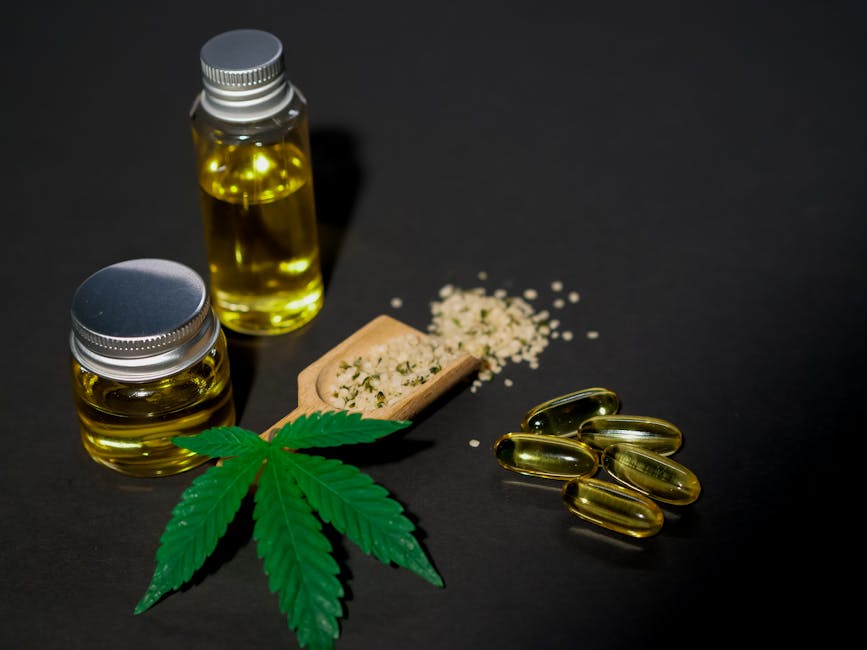
Some retailers and established brands provide more detailed product information online. For example, when comparing products from a company such as Joy Organics, use the same method you would use for any brand: verify the exact product’s CBD amount, ingredient list, and batch-specific documentation. A familiar name is not a reason to skip the checks, and mentioning a brand is not an endorsement.
Be especially cautious of claims that promise to treat, cure, or prevent disease. CBD products should not be treated as a substitute for medical care, and a product label cannot establish that a treatment works. CBD may interact with medicines and can have side effects. If you take medication, have a health condition, are pregnant or breastfeeding, or are considering CBD for a child, consult a qualified healthcare professional before use. Do not change prescribed treatment based on packaging or marketing.
A quick buying checklist
- Does the product state CBD milligrams per bottle, not just “hemp extract” or total cannabinoids?
- Can you find the CBD amount per serving and a defined serving size?
- Does the ingredient list distinguish CBD from hemp seed oil?
- Does the product explain whether it is full spectrum, broad spectrum, or isolate—and disclose THC appropriately?
- Does the QR code lead to a product-specific lab report document?
- Does the report’s batch or lot number match the package?
- Can you compare price using the stated CBD milligrams?
- Are the claims modest and specific, without medical promises?
The bottom line
A leaf sticker is branding, not evidence. If you see no cbd mg listed and cannot find a matching COA, you do not have enough information to confirm how much CBD the product contains. “Total cannabinoids” alone may not answer that question, and hemp seed oil should not be mistaken for CBD oil.
Choose products that disclose CBD per bottle and per serving, identify ingredients clearly, and provide a lab report tied to the batch you are buying. If the company makes verification difficult—or a QR code sends you anywhere but the actual report—there are other products to consider. When it comes to CBD, clear details beat a convincing leaf sticker.